Why Outdoor Play Boosts Brain Development
Imagine two children spending a Saturday afternoon.
One sits indoors, switching between videos, games, and social media for several hours.
The other climbs trees, builds a fort from sticks, chases butterflies, watches birds, jumps across rocks, and invents stories while exploring a nearby park.
Both children are having fun.
But modern neuroscience suggests that their brains are receiving very different kinds of stimulation.
Outdoor play is far more than a way to burn extra energy. It is one of the most powerful natural experiences supporting healthy brain development during childhood.
Researchers have discovered that spending time in natural environments may improve attention, encourage creativity, strengthen memory, reduce stress, support emotional development, and even improve academic performance.
Unlike expensive educational toys or complicated learning programs, nature provides an environment that stimulates multiple areas of the developing brain simultaneously.
Table of Contents
- Why Outdoor Play Matters
- How Nature Stimulates the Brain
- The Science Behind Outdoor Learning
- Memory, Attention & Creativity
- How Exploration Builds Problem-Solving Skills
- Outdoor Activities for Every Age
Why Outdoor Play Matters More Than Ever
Children today spend more time indoors than previous generations.
Schoolwork, television, smartphones, tablets, video games, and streaming services compete for children's attention every day.
Although technology offers many educational opportunities, excessive indoor time may reduce opportunities for active exploration and sensory experiences that help support healthy development.
Outdoor environments naturally encourage children to move, observe, ask questions, solve problems, and interact with the world around them.
Real-world experiences that engage every sense at the same time.
How Nature Stimulates a Growing Brain
Every outdoor environment presents countless learning opportunities.
A child walking through a park constantly processes:
- Different colors.
- Changing sounds.
- Moving animals.
- Uneven surfaces.
- Changing temperatures.
- New smells.
- Unexpected discoveries.
Unlike digital entertainment, which often provides predictable patterns, nature constantly introduces new situations that encourage flexible thinking.
This continuous variety challenges the brain to adapt, observe, and learn.
The developing brain strengthens neural connections through repeated interaction with varied environments. Outdoor play naturally provides this rich sensory input.
The Science Behind Outdoor Learning
Scientists studying child development increasingly recognize the value of outdoor learning.
Natural environments encourage children to explore without rigid instructions.
Instead of memorizing information, children learn by observing, experimenting, asking questions, and solving problems independently.
This type of active learning engages multiple brain regions simultaneously.
For example, while building a small bridge from sticks across a puddle, a child may use:
- Spatial reasoning.
- Planning skills.
- Fine motor coordination.
- Creativity.
- Trial-and-error learning.
- Communication with friends.
Each activity strengthens different cognitive abilities in ways that worksheets alone cannot fully reproduce.
Children often remember experiences they actively participate in better than information they only read or hear.
How Outdoor Play Supports Attention
Parents often notice that children return from outdoor play calmer and more focused.
Researchers continue investigating why this occurs.
One explanation involves what psychologists call attention restoration.
Natural environments gently capture attention without overwhelming the brain.
Unlike fast-moving digital media that constantly demands focus, nature allows the mind to recover while remaining engaged.
This may help children return to schoolwork with improved concentration.
Several studies suggest that spending time in green spaces may support attention and executive function in children.
Nature Encourages Creativity
Unlike toys with fixed rules, natural environments rarely tell children exactly how to play.
A fallen tree may become:
- A pirate ship.
- A castle wall.
- A mountain bridge.
- A dinosaur cave.
- A secret meeting place.
Simple sticks become fishing poles, magic wands, building materials, or scientific tools.
Leaves become artwork.
Rocks become treasure.
This type of imaginative play encourages flexible thinking, one of the foundations of creativity.
The fewer predetermined rules an environment provides, the more opportunities children have to invent their own ideas.
Outdoor Exploration Builds Problem-Solving Skills
Nature constantly presents small challenges.
How do you cross the stream?
Which path is safest?
How can you build a shelter?
Why did the insect disappear?
Children naturally begin asking questions and testing possible solutions.
This process strengthens reasoning, observation, and critical thinking skills.
Importantly, mistakes become valuable learning experiences rather than failures.
Curiosity is one of the strongest drivers of lifelong learning. Outdoor exploration naturally encourages children to ask more questions about the world around them.
A Fun Tool That Inspires Outdoor Exploration
Children become even more engaged when they can investigate nature like real scientists.
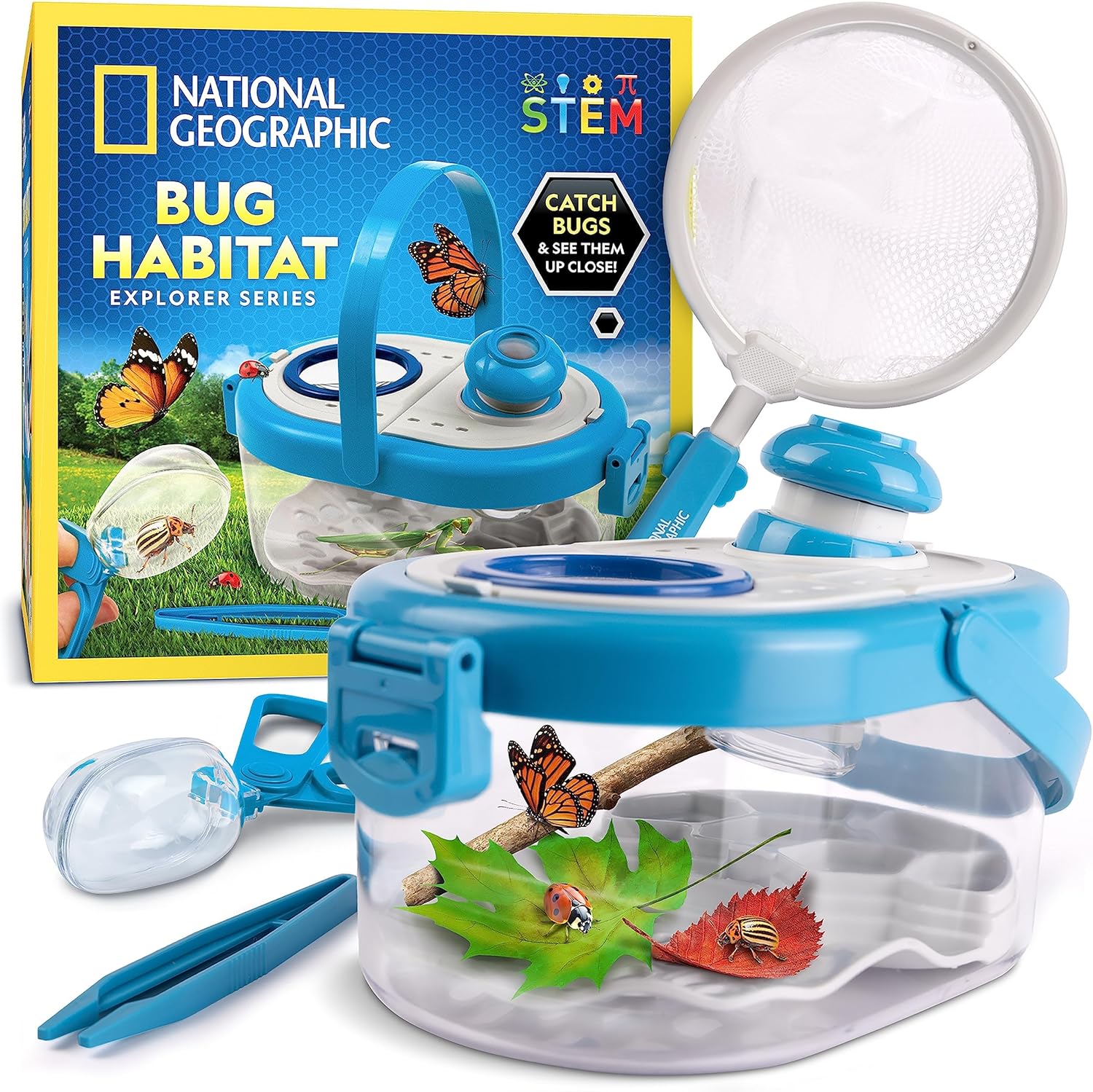
Recommended Product: National Geographic Explorer Kit
This educational outdoor exploration kit includes tools that encourage children to observe insects, rocks, plants, animal tracks, and other natural discoveries. Rather than replacing outdoor play, it inspires curiosity and helps children ask more scientific questions while exploring parks, forests, beaches, or backyards.
The kit combines learning with adventure, making family outdoor activities even more engaging.
Check Price on AmazonIn Part 2, you'll discover how outdoor play supports emotional well-being, physical health, confidence, and social development, learn how much outdoor time children really need, explore research from environmental psychologists, and see another practical tool that makes every family adventure even more exciting.
Outdoor Play Supports Emotional Well-Being
Healthy brain development is closely connected to emotional health.
Children who spend time outdoors are not only exercising their muscles—they are also learning how to regulate emotions, cope with challenges, and build confidence.
Natural environments provide opportunities for children to experience manageable risks, solve unexpected problems, and recover from small setbacks.
For example, climbing over a fallen log, balancing on stepping stones, or building a small shelter from branches teaches persistence and resilience.
Each success gives children confidence in their own abilities.
Psychologists often describe outdoor free play as one of the most natural ways children develop independence and emotional resilience.
Nature Helps Reduce Stress
Modern childhood can be surprisingly busy.
School assignments, organized sports, extracurricular activities, and increasing screen time may leave children feeling mentally tired.
Natural environments offer something different.
Birdsong, moving leaves, fresh air, and open spaces provide a calmer sensory experience compared with crowded indoor environments.
Researchers continue studying how exposure to green spaces may help lower stress and improve emotional well-being in children.
Time spent outdoors encourages children to slow down, observe, explore, and enjoy the present moment without constant digital stimulation.
Outdoor Play Improves Physical Health—And That Helps the Brain
The brain and body are deeply connected.
When children move more, their brains benefit too.
Outdoor activities naturally encourage:
- Running.
- Jumping.
- Climbing.
- Balancing.
- Throwing.
- Catching.
- Crawling.
- Walking.
These movements strengthen muscles, improve coordination, enhance balance, and support cardiovascular fitness.
Healthy blood circulation also helps deliver oxygen and nutrients throughout the body, including the brain.
Children rarely think of outdoor play as "exercise," yet many outdoor games naturally meet recommendations for daily physical activity.
Outdoor Play Builds Social Skills
Unlike many structured classroom activities, outdoor play often requires children to negotiate rules, cooperate, solve disagreements, and work together.
Building a fort, organizing a game of tag, or creating an imaginary adventure teaches valuable life skills such as:
- Communication.
- Leadership.
- Teamwork.
- Empathy.
- Conflict resolution.
- Patience.
These social experiences contribute to healthy emotional and cognitive development.
Every shared adventure teaches children how to interact with others in ways that cannot be fully learned from books or screens.
How Much Outdoor Time Do Children Need?
There is no single magic number that fits every child.
However, many pediatric and public health organizations encourage children to spend time outdoors every day whenever possible.
Parents can begin with simple goals such as:
- A walk after school.
- Weekend park visits.
- Playing in the backyard.
- Nature scavenger hunts.
- Family bike rides.
- Exploring local nature trails.
Consistency is far more important than occasional long outings.
Even 20–30 minutes of outdoor play each day can become a meaningful family habit that supports both physical and mental well-being.
Real-Life Example: What Environmental Psychology Teaches Us
Environmental psychologist Professor Frances Kuo spent many years studying how exposure to green spaces influences human health and behavior.
Her research suggested that natural environments may support attention, self-discipline, emotional regulation, and healthy child development.
Although outdoor play is only one part of a healthy childhood, her work helped inspire greater interest in designing schools, parks, and neighborhoods that provide children with more opportunities to experience nature.
Today, many educators incorporate outdoor learning because growing evidence suggests that nature can complement traditional classroom education.
Children do not always need expensive educational technology. Sometimes the most powerful learning environment is a nearby park, garden, or forest trail.
A Tool That Makes Outdoor Adventures Even More Exciting
Simple observation tools encourage children to slow down, notice details, and ask scientific questions about the natural world.

Recommended Product: Educational Insights GeoSafari Jr. Kidnoculars
Designed especially for young explorers, these child-friendly binoculars help children observe birds, insects, trees, and wildlife during family walks or camping trips. Their oversized focus-free lenses make them easy for young children to use while encouraging curiosity about nature.
Outdoor observation helps transform every walk into an exciting learning adventure.
Check Price on AmazonIn Part 2B, we'll debunk common myths about outdoor play, answer frequently asked questions, summarize the key lessons, and provide scientific references, a medical disclaimer, SEO description, and article category.
Common Myths About Outdoor Play
As research on child development has grown, so have misconceptions about outdoor play. Let's look at what science actually tells us.
Myth 1: Outdoor Play Is Just Recreation
Play certainly is fun, but it is also one of the primary ways children learn. Outdoor play combines movement, problem-solving, communication, sensory experiences, creativity, and emotional regulation into one natural activity.
Unlike passive entertainment, active outdoor play encourages children to think, adapt, and make decisions continuously.
Myth 2: Educational Apps Can Replace Nature
Digital learning tools can be valuable when used appropriately, but they cannot fully replace real-world experiences.
Nature stimulates all five senses simultaneously. Children feel different textures, hear birds, smell plants, observe changing weather, and interact with living environments in ways that screens simply cannot recreate.
Myth 3: Children Need Expensive Outdoor Equipment
Many of the most valuable outdoor experiences require very little equipment.
A local park, neighborhood trail, backyard, beach, or forest path provides endless opportunities for exploration.
Simple objects like sticks, leaves, stones, pinecones, and flowers often become the most creative learning tools.
Myth 4: Outdoor Play Is Only Important for Younger Children
Children of every age continue to benefit from spending time outdoors.
Older children and teenagers can enjoy hiking, cycling, birdwatching, photography, camping, gardening, nature journaling, or outdoor sports that continue supporting physical and mental well-being.
Outdoor experiences evolve with age, but the benefits of connecting with nature continue throughout childhood and adulthood.
Simple Outdoor Activities That Build Healthy Brains
You don't need elaborate plans to encourage meaningful outdoor learning.
Here are easy ideas that most families can enjoy together:
- Create a nature scavenger hunt.
- Collect and identify different leaves.
- Watch birds and keep a simple observation journal.
- Plant flowers or vegetables.
- Build a small bug hotel.
- Visit local botanical gardens.
- Walk barefoot on grass where it is safe.
- Count different bird species.
- Observe clouds and discuss weather changes.
- Build simple structures using sticks and stones.
Every outdoor adventure becomes an opportunity to ask questions, make discoveries, and strengthen curiosity.
Frequently Asked Questions
How much outdoor time should children have every day?
There is no single perfect amount for every child. Many health organizations encourage daily outdoor play whenever possible, combined with regular physical activity appropriate for the child's age.
Does outdoor play really improve learning?
Research suggests that spending time in natural environments may support attention, executive function, creativity, and emotional well-being, all of which contribute to learning.
Can outdoor play replace organized sports?
Both have value. Organized sports build teamwork and specific athletic skills, while free outdoor play encourages creativity, exploration, independence, and problem-solving.
What if my child prefers screens?
Start gradually. Family walks, nature treasure hunts, gardening, or visiting local parks can help make outdoor time enjoyable without forcing participation.
Is outdoor play safe?
With age-appropriate supervision, safe environments, and reasonable precautions such as sunscreen, hydration, and proper clothing, outdoor play is generally considered an important part of a healthy childhood.
Can nature help children who struggle with attention?
Researchers continue studying this area. Some evidence suggests that exposure to green spaces may support attention and emotional regulation, although outdoor play should not be viewed as a replacement for professional medical care when needed.
Conclusion
Childhood is filled with opportunities to learn—but some of the most powerful lessons happen far away from classrooms.
Every tree climbed, every insect discovered, every trail explored, and every imaginative game played outdoors helps children build far more than happy memories.
Outdoor play supports healthy brain development by encouraging curiosity, strengthening attention, improving creativity, promoting movement, building confidence, and creating meaningful real-world experiences that no digital device can fully replace.
The beauty of nature is that it teaches without pressure.
Children naturally observe, experiment, ask questions, solve problems, and develop resilience while simply enjoying themselves.
Parents do not need expensive educational programs to support healthy brain development.
Sometimes the greatest gift is simply opening the front door and inviting children outside to explore the incredible classroom that nature has already created.
Every outdoor adventure plants two important seeds: one in nature and one in a child's developing brain. The discoveries children make today may inspire a lifetime of curiosity, confidence, learning, and healthy living.
Scientific References
- American Academy of Pediatrics. The Power of Play: A Pediatric Role in Enhancing Development in Young Children.
- Centers for Disease Control and Prevention. Physical Activity Guidelines for Children.
- World Health Organization. Guidelines on Physical Activity, Sedentary Behaviour and Sleep for Children.
- National Institutes of Health. Children's Environmental Health.
- Harvard Center on the Developing Child. Brain Architecture.
- National Library of Medicine (PubMed). Nature Exposure and Cognitive Development in Children.
- American Psychological Association. Healthy Children and Nature.
- UNICEF. Early Childhood Development.
Medical Disclaimer
This article is provided for educational and informational purposes only. It is not intended to diagnose, treat, cure, or prevent any medical condition or developmental disorder.
Every child develops at their own pace. Outdoor play is one important part of a healthy childhood, but it should not replace professional medical evaluation or educational support when concerns about development, behavior, or learning arise.
Parents should always provide age-appropriate supervision and follow local safety recommendations during outdoor activities, including sun protection, hydration, weather precautions, and safe play environments.
The authors and publishers of this website assume no responsibility or liability for any injury, loss, or damage resulting from the use or misuse of the information presented in this article.


